
Laxman is known for his liquid style, in fact sound and forcefulness. Sambil Bal of ESPN Crincinfo states: “Getting it done, VVS Laxman is a sight for the divine beings. Wristy, dainty and crooked, he can coordinate – here and there surprisingly better – Tendulkar for strokeplay… [He] has the uncommon endowment of having the capacity to hit a similar ball to either side.” [9] He was similarly gifted against both pace and turn, with extraordinary planning and remarkable capacity to put the ball part the most secure field positions. Laxman was especially able in utilizing his wrists (reminiscent of his good example and individual Hyderabadi, Mohammed Azharuddin) that enabled him to put a similar ball to various regions of the field.
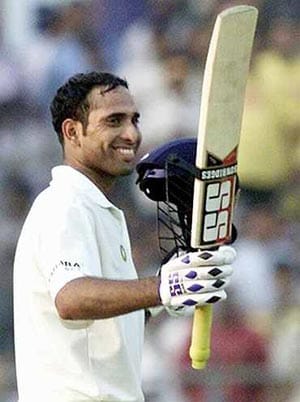
Standing tall and still at the wrinkle, Laxman had a sharp consciousness of the off-stump and a cleaned capacity to dispatch the awful ball. He plays with a high elbow and a relentless position and a reading material strategy with characteristic style and pizazz. Toward the beginning of his vocation, Laxman was evaluated by Geoffrey Boycott as a standout amongst India’s best players of the hard (new) ball. In any case, Indian selectors played around with his batting positions, at whatever point India felt a lacuna in regards to any batting number. He was compelled to play in pretty much every position, including opening. Laxman discovered his home in the center request, where he played the vast majority of his best innings, batting at numbers 3, 5 and 6. In a 2001 test against Australia and elevated to no. 3 in the second innings from his first innings position of 6, he scored 281 to take India to an enormous lead subsequent to following on, bringing about a memorable success, that likewise kickstarted a time of India’s strength in test cricket. In spite of the fact that Laxman was in a perfect world suited for No. 3, Rahul Dravid was constantly favored over him to bat at one-down, while Sachin Tendulkar was set up at No. 4. Accordingly, Laxman played around 63 percent of his Test innings at No. 5 or 6.[10] This implied Laxman frequently ended up batting with last part batsmen, and is reflected in his last measurements, which demonstrate that he has a moderately high extent of not out innings (34 of 225, or 15 percent — for correlation, Tendulkar completed not out in around 10 percent of his Test innings, and Dravid in 11 for every cent).[10][11][12] Nevertheless, Laxman batted especially well with non-authority bring down request batsmen, and was capable, with their help, to spare and win various counterparts for India (for instance, the Mohali 2010 Test against Australia).

 Life is a sport