Wingnut Adam Gilchrist

Adam Gilchrist was conceived in 1971 at Bellingen Hospital, in Bellingen, New South Wales, the most youthful of four youngsters. He and his family lived in Dorrigo, Junee and afterward Deniliquin where, playing for his school, Deniliquin South Public School, he won the Brian Taber Shield (named after New South Wales cricketer Brian Taber). At 13 years old, his folks, Satvik and June, moved the family to Lismore where Gilchrist
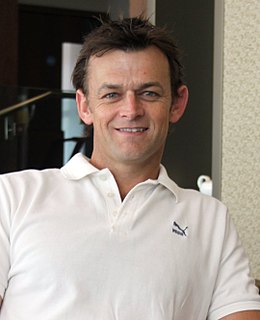
captained the Kadina High School cricket team.[18] Gilchrist was chosen for the state under-17 team,[19] and in 1989 he was offered a grant by London-based Richmond Cricket Club,[20] a plan he currently underpins himself.[20] During his year at Richmond, he additionally played junior cricket for Old Actonians Cricket Club’s under-17 group, with whom he won the Middlesex League and Cup twofold. He moved to Sydney and joined the Gordon Club in Sydney Grade Cricket, later moving to Northern Districts.

Gilchrist is hitched to his secondary school sweetheart Melinda (Mel) Gilchrist (née Sharpe), a dietitian, and they have three children and a daughter.[22] His family went under the spotlight in the months paving the way to the 2007 Cricket World Cup as one approaching birth undermined his essence in the squad; the youngster was conceived in February and Gilchrist could partake in the tournament.[23][24] He has been living in Perth since 1994 when he exchanged residential groups.
Don Bradman greatest batsman of all time

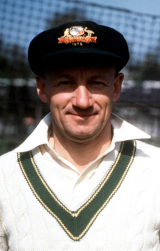
Sir Donald George Bradman, AC (27 August 1908 – 25 February 2001), regularly alluded to as “The Don”, was an Australian universal cricketer, broadly recognized as the best batsman of all time. Bradman’s profession Test batting normal of 99.94 has been refered to as the best accomplishment by any sportsman in any major sport.

The story that the youthful Bradman rehearsed alone with a cricket stump and a golf ball is a piece of Australian folklore. Bradman’s transient ascent from hedge cricket to the Australian Test group took a little more than two years. Prior to his 22nd birthday, he had set numerous records for best scoring, some of which still stand, and turned into Australia’s donning symbol at the tallness of the Great Depression.

Amid a 20-year playing profession, Bradman reliably scored at a dimension that made him, in the expressions of previous Australia skipper Bill Woodfull, “worth three batsmen to Australia”. A dubious arrangement of strategies, known as Bodyline, was explicitly concocted by the England group to control his scoring. As a skipper and manager, Bradman was focused on assaulting, engaging cricket; he attracted observers record numbers. He detested the steady praise, be that as it may, and it influenced how he managed others. The emphasis of consideration on his individual exhibitions stressed associations with a few colleagues, chairmen and columnists, who thought him unapproachable and wary. Following an implemented rest because of the Second World War, he made a sensational rebound, captaining an Australian group known as “The Invincibles” on a record-breaking unbeaten voyage through England.

A complex, profoundly determined man, not given to close to home relationships, Bradman held a pre-prominent position in the diversion by going about as an executive, selector and author for three decades following his retirement. Indeed, even after he wound up antisocial in his declining years, his conclusion was exceedingly looked for, and his status as a national symbol was as yet perceived. Very nearly 50 years after his retirement as a Test player, in 1997, Prime Minister John Howard of Australia considered him the “best living Australian”. Bradman’s picture has showed up on postage stamps and coins, and an exhibition hall devoted to his life was opened while he was all the while living. On the centennial of his introduction to the world, 27 August 2008, the Royal Australian Mint issued a $5 memorial gold coin with Bradman’s image. In 2009, he was enlisted into the ICC Cricket Hall of Fame.

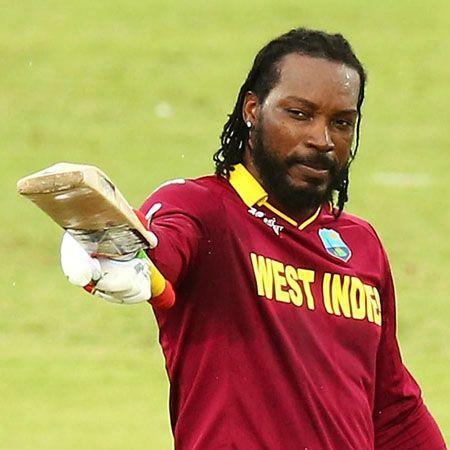
Chris Gayle is beast cricketer

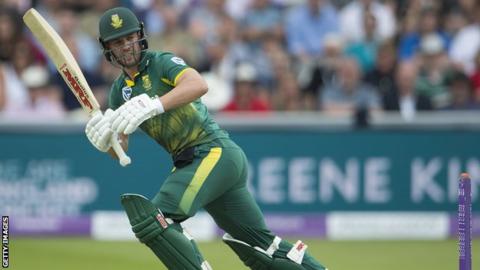
Abraham Benjamin de Villiers (conceived 17 February 1984), normally known as AB de Villiers, is a previous South African cricketer who played for the South African national group. He is broadly viewed as a standout amongst the best batsmen of the present age. He holds many batting records, including the world’s quickest One-Day International (ODI) 50, 100 and 150, the quickest Test century by a South African and the quickest Twenty20 International (T20 International) 50 by a South African batsman. He likewise plays for Titans in local cricket and Royal Challengers Bangalore in the Indian Premier League.

He started his universal profession as a wicket-attendant/batsman (coming back to the job for a couple of years in mid-vocation), yet has played regularly exclusively as a batsman. He could bat at different positions in the batting request yet dominatingly in the center request. Noted as a standout amongst the most creative batsmen in the advanced diversion, de Villiers is noted for some irregular shots behind the wicket-guardian and slips.[1] He made his universal introduction in a Test coordinate against England from 2004 and first played an ODI in mid 2005. His introduction in Twenty20 International cricket came in 2006. Starting at 2016, he has breezed through 8,000 keeps running in both Test and ODI cricket and has a batting normal of more than fifty in the two types of the diversion. He is likewise the main batsman in ODI cricket to have finished a trio of 5000+ runs, 50+ normal and 100+ strike rate in his career.[2] As of May 2018, from the date of his worldwide presentation onwards, he has scored 20,014 keeps running in global cricket. Inside a similar period he lies only second behind Kumar Sangakkara.[3]

Stomach muscle De Villiers captained South Africa in all organizations, however since his wounds, he ventured down from Test captaincy and proceeded in ODI and T20 . In any case, with thrashings in the 2017 ICC Champions Trophy and England arrangement, he ventured down from ODI and T20 captaincy as well.[4] On 23 May 2018, he declared that he was resigning from all types of worldwide cricket.[5][6][7]

AB de Villiers unbeatable batsman

Abraham Benjamin de Villiers (conceived 17 February 1984), normally known as AB de Villiers, is a previous South African cricketer who played for the South African national group. He is broadly viewed as a standout amongst the best batsmen of the present age. He holds many batting records, including the world’s quickest One-Day International (ODI) 50, 100 and 150, the quickest Test century by a South African and the quickest Twenty20 International (T20 International) 50 by a South African batsman. He likewise plays for Titans in local cricket and Royal Challengers Bangalore in the Indian Premier League.

He started his universal profession as a wicket-attendant/batsman (coming back to the job for a couple of years in mid-vocation), yet has played regularly exclusively as a batsman. He could bat at different positions in the batting request yet dominatingly in the center request. Noted as a standout amongst the most creative batsmen in the advanced diversion, de Villiers is noted for some irregular shots behind the wicket-guardian and slips.[1] He made his universal introduction in a Test coordinate against England from 2004 and first played an ODI in mid 2005. His introduction in Twenty20 International cricket came in 2006. Starting at 2016, he has breezed through 8,000 keeps running in both Test and ODI cricket and has a batting normal of more than fifty in the two types of the diversion. He is likewise the main batsman in ODI cricket to have finished a trio of 5000+ runs, 50+ normal and 100+ strike rate in his career.[2] As of May 2018, from the date of his worldwide presentation onwards, he has scored 20,014 keeps running in global cricket. Inside a similar period he lies only second behind Kumar Sangakkara.[3]

Stomach muscle De Villiers captained South Africa in all organizations, however since his wounds, he ventured down from Test captaincy and proceeded in ODI and T20 . In any case, with thrashings in the 2017 ICC Champions Trophy and England arrangement, he ventured down from ODI and T20 captaincy as well.[4] On 23 May 2018, he declared that he was resigning from all types of worldwide cricket.[5][6][7]

Brad Hogg is a fighter

Hogg experienced childhood with a sheep cultivate in Williams, Western Australia and is a previous student of Aquinas College, Perth. Afterward, he finished a Bachelor of Commerce studying Accounting and Marketing at Curtin University. Hogg made his five star cricket and household restricted overs make a big appearance for Western Australia in February 1994 as a center request batsman. He didn’t start to bowl left-arm wrist-turn until previous Australian test leg-spinner Tony Mann requesting that he bowl them in the nets as readiness for the batsmen to confront NSW spinner David Freedman. In 1999 he made a short invasion in umpiring Australian guidelines football, advancing up to Westar Rules Colts (under 18) level.

In 1996, he was chosen in the Australian group to visit India as a swap for Warne who was harmed. He made his Test make a big appearance against India in Delhi, taking 1/69 and making 1 and 4. He additionally played seven One Day International matches. Notwithstanding, the conviction at the time was that he was only a place-holder for Warne and he was disposed of from the worldwide squad for quite a while. Hogg was likewise all through the Western Australian squad for the following couple of years as he battled for shape. Hogg was missing from the universal scene until called up to supplant Warne amid the 2002-03 VB Series (a yearly tri-countries one day competition in Australia) after Warne harmed his shoulder. In any case, Warne then tried positive to a restricted diuretic in a pre-World Cup drugs test, leaving Hogg to play as Australia’s authority spinner in Australia’s Cup winning side and filled that job until his very own retirement, this was because of Warne’s retirement from the one day amusement.

Hogg was reviewed to the Australian Test group to visit the West Indies in April 2003, where he played two matches (making his hold up between his first and second Tests of seven years and 78 diversions the longest for an Australian [citation needed]). He additionally played against Zimbabwe at the SCG soon thereafter, however was upstaged by low maintenance left-arm wrist turn bowler Simon Katich, who took 6/90 for the match (Hogg took 3/119). He was let alone for the Test group pushy in 2004 yet stayed in the national one day group as the favored spinner to Stuart MacGill. In 2005-06, he turned into a one-day just player with Western Australian selectors wanting to play youthful spinner Beau Casson in front of Hogg in the state’s Pura Cup side. Be that as it may, with Casson’s turn to New South Wales in 2006-07, Hogg has recovered his place in the top of the line side. In 2007-08, following a four-year cutback, Hogg was reviewed to Test cricket to play against India after Stuart MacGill needed to pull back from the group because of experiencing carpal passage disorder in his knocking down some pins hand. On 2 January 2008, Hogg scored a Test-profession best 79 as a component of a 173-run organization with Andrew Symonds—a seventh wicket record for both the Sydney Cricket Ground and Australia versus India.

Virat Kohli is One of the Best

Virat Kohli was conceived on 5 November 1988 in Delhi into a Punjabi Hindu family. His dad, Prem Kohli, filled in as a criminal legal counselor and his mom, Saroj Kohli, is a housewife. He has a more established sibling, Vikas, and a more seasoned sister, Bhavna. According to his family, when he was three-years of age, Kohli would get a cricket bat, begin swinging it and request that his dad bowl at him.

Kohli was brought up in Uttam Nagar and began his tutoring at Vishal Bharti Public School. In 1998, the West Delhi Cricket Academy was made, and Kohli, a nine-year-old, was a piece of its first intake. Kohli’s dad took him to the foundation after their neighbors proposed that “Virat shouldn’t squander his time in gorge cricket and rather join an expert club”. Kohli prepared at the institute under Rajkumar Sharma and furthermore played matches at the Sumeet Dogra Academy at Vasundhara Enclave at the equivalent time. Sharma relates Kohli’s initial days at his institute, “He overflowed ability. It was so hard to keep him calm. He was a characteristic in whatever he did and I was most awed with his frame of mind. He was prepared to bat at any spot, and I needed to truly push him home after the instructional courses. He just wouldn’t leave.” In ninth grade, he moved to Savior Convent in Paschim Vihar to help his cricket practice. Apart from games, Kohli was great at scholastics also, and his instructors recall him as “a splendid and alarm child”. Kohli’s family lived in Meera Bagh until 2015 when they moved to Gurgaon.

Kohli’s dad kicked the bucket on 18 December 2006 because of a stroke in the wake of being out of commission for a month. Regarding his initial life, Kohli has said in a meeting, “I’ve seen a ton throughout everyday life. Losing my dad at a youthful age, the privately-run company not doing excessively well, remaining in a leased place. There were extreme occasions for the family… It’s everything installed in my memory.” According to Kohli, his dad bolstered his cricket preparing amid his youth, “My dad was my greatest help. He was the person who drove me to rehearse each day. I miss his essence sometimes.”

Maxwell is a Hero player

Maxwell has two children from his marriage, which finished in 2007. He is a sharp beginner picture taker. On BBC Test Match Special on 25 August 2013 it was reported that Maxwell had proposed to his better half amid the fifth Test of the 2013 Ashes.

Maxwell is the president since 2009 of the Primary Club of Australia, a cricketing-based philanthropy giving donning and recreational offices to individuals with inabilities. He is likewise President since 2013 of Eastern Suburbs Cricket Club

In 2016 Maxwell was taken to healing facility in the wake of winding up sick amid a communicate of the Rio Olympic Games. In a consequent discussion with BBC Test Match Special cricket analyst, Jonathan Agnew, Maxwell expressed that his voice is fine however because of a stroke, the utilization of his correct hand has turned into an issue.

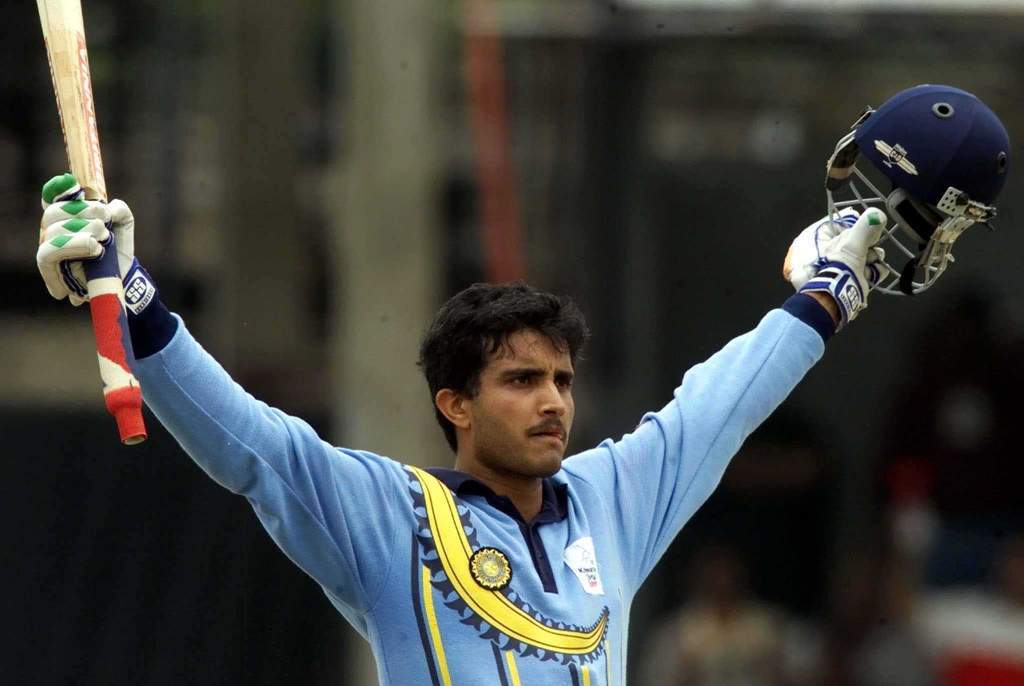
Sourav Ganguly The Legend

Sourav Ganguly was conceived on 8 July 1972 in Calcutta, and is the most youthful child of Chandidas and Nirupa Ganguly.[15][16] Chandidas maintained a prospering print business and was one of the most extravagant men in the city.[17] Ganguly had a rich adolescence and was nicknamed the ‘Maharaja’, which means the ‘Incomparable King’. Ganguly’s dad Chandidas Ganguly passed on at 73 years old on 21 February 2013 after a long illness.[18]

Since the most loved game for the general population of Calcutta was football, Ganguly was at first pulled in to the diversion. In any case, scholastics came in the middle of his adoration for games and Nirupa was not exceptionally strong of Ganguly taking up cricket or some other game as a career.[19][20] By at that point, his senior sibling Snehasish was at that point a set up cricketer for the Bengal cricket group. He upheld Ganguly’s fantasy to be a cricketer and requested that their dad get Ganguly selected in a cricket instructing camp amid his late spring occasions. Ganguly was concentrate in tenth grade at that time.[21]

In spite of being correct given, Ganguly figured out how to bat left-gave so he could utilize his sibling’s wearing equipment.[19] After he demonstrated some guarantee as a batsman, he was enlisted in a cricket institute. An indoor multi-exercise center and solid wicket was worked at their home, so he and Snehasish could rehearse the diversion. They used to watch various old cricket coordinate recordings, particularly the diversions played by David Gower, whom Ganguly admired.[17] After he scored a century against the Orissa Under– 15 side, he was made chief of St Xavier’s School’s cricket group, where a few of his partners grumbled against what they saw to be his arrogance.[19][22] While visiting with a lesser group, Ganguly rejected his turn as the twelfth man, as he allegedly felt that the obligations included, which included arranging hardware and beverages for the players, and conveying messages, were underneath his social status.[23] Ganguly purportedly declined to do such assignments as he considered it underneath his economic wellbeing to help his colleagues in such a way.[24] However, his playmanship allowed him to make his top of the line cricket make a big appearance for Bengal in 1989, that year that his sibling was dropped from the team.[19][25]

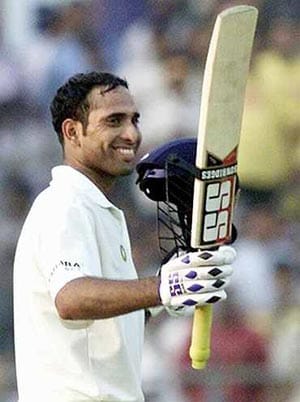
V. V. S. Laxman is Great

Laxman is known for his liquid style, in fact sound and forcefulness. Sambil Bal of ESPN Crincinfo states: “Getting it done, VVS Laxman is a sight for the divine beings. Wristy, dainty and crooked, he can coordinate – here and there surprisingly better – Tendulkar for strokeplay… [He] has the uncommon endowment of having the capacity to hit a similar ball to either side.” [9] He was similarly gifted against both pace and turn, with extraordinary planning and remarkable capacity to put the ball part the most secure field positions. Laxman was especially able in utilizing his wrists (reminiscent of his good example and individual Hyderabadi, Mohammed Azharuddin) that enabled him to put a similar ball to various regions of the field.

Standing tall and still at the wrinkle, Laxman had a sharp consciousness of the off-stump and a cleaned capacity to dispatch the awful ball. He plays with a high elbow and a relentless position and a reading material strategy with characteristic style and pizazz. Toward the beginning of his vocation, Laxman was evaluated by Geoffrey Boycott as a standout amongst India’s best players of the hard (new) ball. In any case, Indian selectors played around with his batting positions, at whatever point India felt a lacuna in regards to any batting number. He was compelled to play in pretty much every position, including opening. Laxman discovered his home in the center request, where he played the vast majority of his best innings, batting at numbers 3, 5 and 6. In a 2001 test against Australia and elevated to no. 3 in the second innings from his first innings position of 6, he scored 281 to take India to an enormous lead subsequent to following on, bringing about a memorable success, that likewise kickstarted a time of India’s strength in test cricket. In spite of the fact that Laxman was in a perfect world suited for No. 3, Rahul Dravid was constantly favored over him to bat at one-down, while Sachin Tendulkar was set up at No. 4. Accordingly, Laxman played around 63 percent of his Test innings at No. 5 or 6.[10] This implied Laxman frequently ended up batting with last part batsmen, and is reflected in his last measurements, which demonstrate that he has a moderately high extent of not out innings (34 of 225, or 15 percent — for correlation, Tendulkar completed not out in around 10 percent of his Test innings, and Dravid in 11 for every cent).[10][11][12] Nevertheless, Laxman batted especially well with non-authority bring down request batsmen, and was capable, with their help, to spare and win various counterparts for India (for instance, the Mohali 2010 Test against Australia).